

The information provided below is current at this time. If any updates are made to the information below, the corresponding year in which the updates are made will be included in the publication title.
Four foliar diseases reduce watermelon yields in South Carolina. Gummy stem blight and powdery mildew are the most common diseases in spring crops.1
Gummy stem blight symptoms are large, round spots, characterized by concentric rings on the edges of leaves and dry cankers on the main stem (Figure 1). The best fungicides are Miravis Prime, Inspire Super, or Luna Flex.
Powdery mildew has yellow spots on the top of the leaves and white powdery mildew on the bottom (Figure 2). It shows up during dry periods. The best fungicides are Gatten or Vivando. Prolivo is not recommended because it is less effective on the bottom of leaves than other powdery mildew fungicides.2
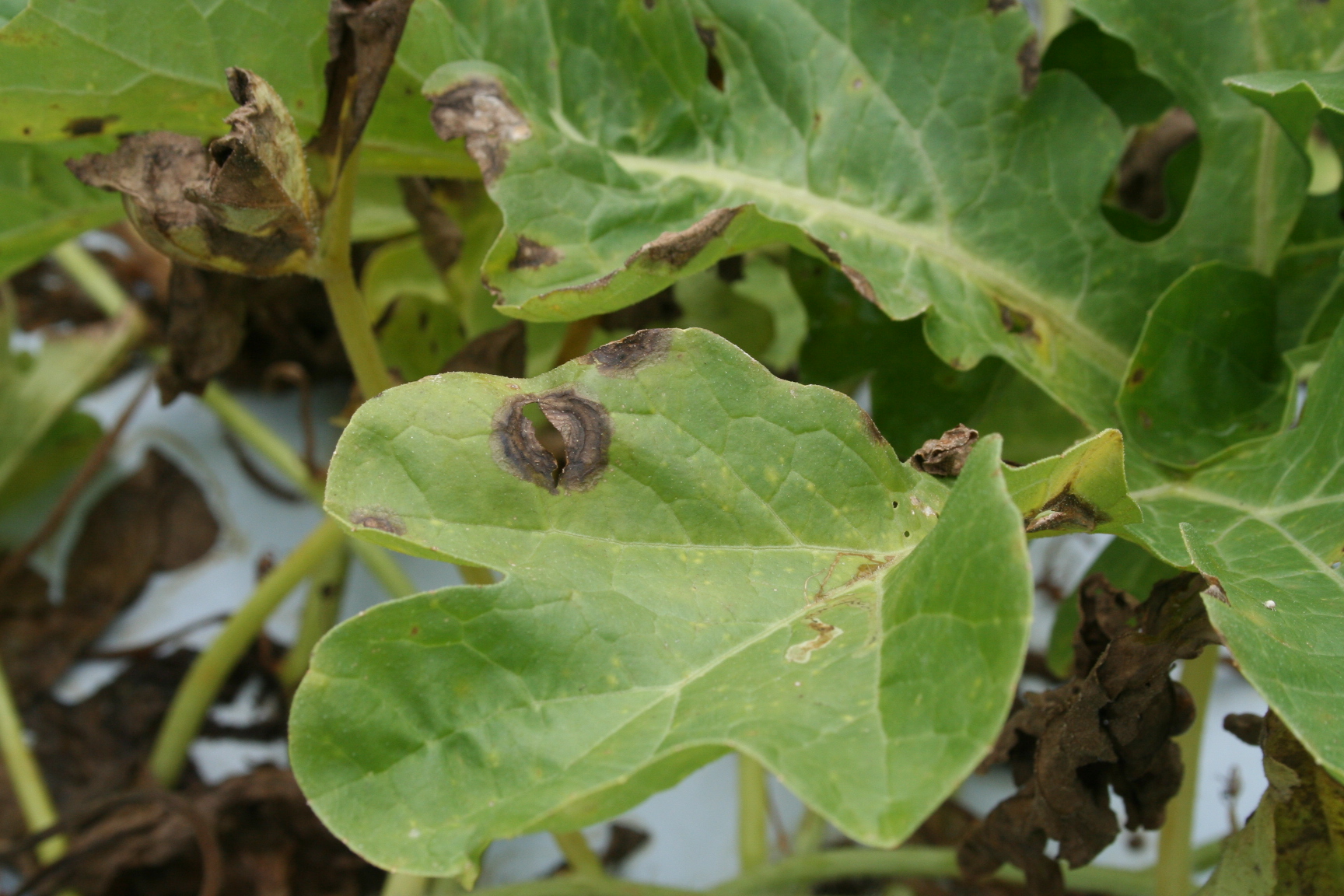
Figure 1. Gummy stem blight. Image Credit: Anthony P. Keinath, Clemson University.
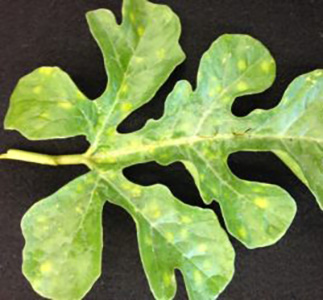
Figure 2. Powdery mildew. Image Credit: Anthony P. Keinath, Clemson University.
Downy mildew starts as brown or yellow round or irregular spots that enlarge quickly (Figure 3). If seen, spray immediately with either Ranman or Orondis Ultra, followed by the other fungicide the following week.
Anthracnose symptoms start as dark, irregular spots with points like a star (Figure 4). Spots are smaller than leaf spots of gummy stem blight. It also affects vines and young fruit. The best fungicides are Evito, Flint, Cabrio, mancozeb, or chlorothalonil.

Figure 3. Downy mildew. Image Credit: Anthony P. Keinath, Clemson University.
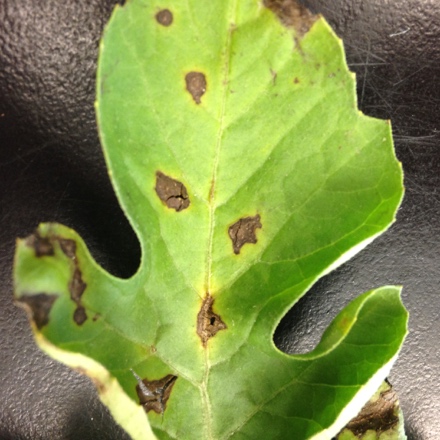
Figure 4. Anthracnose. Image Credit: Anthony P. Keinath, Clemson University.
Scouting for Diseases
- Walk fields weekly and the day before spraying.
- Brown spots are usually symptoms of gummy stem blight or anthracnose. Anthracnose also shows up as tan, narrow, sunken spots on vines.
- Yellow spots on leaves are symptoms of powdery mildew or downy mildew. Look for spores on the underside of leaves. Powdery mildew spores are white; downy mildew spores are purple.
- Call your local Clemson Cooperative Extension county office if you can’t identify the disease. County office contact information is available on the Cooperative Extension website.
How to Get the Most Out of Spraying
Table 1 provides details for fungicide spray programs for spring and fall crops. Follow these steps to get the most out of your fungicide program.
- Rotate fields to non-cucurbit crops for two years in between watermelon and cantaloupe to help control gummy stem blight and anthracnose.3
- Start spraying when vines begin to run (12 inches long), no later than when the first (male) flowers open.
- Between vine run until mid-May, spray every seven to ten days.
- After mid-May, spray every week through harvest regardless of the weather. Powdery mildew can attack under dry conditions, with morning dew providing sufficient moisture for rapid spread.
- All watermelon diseases can attack at any time a crop goes more than a week without a fungicide.
- Apply fungicides, allowing time to dry, before a predicted rain rather than after.
- For best control after disease starts, use systemic fungicides (see option “b” in the first column of table 1).
- Do not stop spraying until one week before the final picking.4
Fungicide Programs
- The spring watermelon fungicide program is designed to manage bacterial fruit blotch, bacterial leaf spot, gummy stem blight, powdery mildew, anthracnose, and downy mildew.
- The fall program is designed to manage gummy stem blight, downy mildew, anthracnose, and powdery mildew.
- Chlorothalonil and mancozeb protect against gummy stem blight, downy mildew, and anthracnose; chlorothalonil also protects against powdery mildew.
- Week-by-week rotation is built into spray programs for systemic fungicides, like Miravis Prime, to reduce the risk of fungicide resistance.
- Inspire Super should not be sprayed after watermelon harvest starts because it has a 7-day pre-harvest interval (PHI).
- When harvest begins less than nine weeks after transplanting, skip ahead to spray number 6a or 6b listed in table 1. Mancozeb and Gavel have a 5-day PHI.
- See the current edition of the “Southeastern U.S. Vegetable Crop Handbook” for more information.5
Resistance to Tebuconazole
Since 2019, most (93%) samples of the gummy stem blight fungus collected from watermelon crops in South Carolina are moderately resistant to tebuconazole, the active ingredient in Monsoon, Folicur, and other products.6 Only 3% of the samples were sensitive, and 4% were highly resistant. The frequency of moderately resistant samples on seven farms was 69% to 100%.
In greenhouse tests, tebuconazole only controlled 70% of the moderately resistant isolates. If a tebuconazole product, like Monsoon is sprayed, gummy stem blight will likely still develop on 30% of the treated foliage. Continued use of tebuconazole will lead to a highly resistant fungus, which means control is only 45%. Widespread resistance is why tebuconazole is no longer recommended.
Table 1. Weekly fungicide guide for watermelon.
| Weeks after Transplanting (Spray Number) | Fungicide Program for Spring Watermelon* | Comments on Spring Program | Fungicide Program for Fall Watermelon* | Comments on Fall Program |
| 4 ((vine run) (1) | mancozeb + fixed copper | Add a fixed copper to prevent bacterial leaf spot and fruit blotch. | chlorothalonil | Chlorothalonil protects against gummy stem blight, downy mildew, anthracnose, and powdery mildew.
|
| 5 (2) | chlorothalonil | chlorothalonil | ||
| 6 (3a)** | chlorothalonil or mancozeb | mancozeb + Gatten | Add Gatten if weather is unusually dry to prevent powdery mildew. | |
| 6 (3b)** | or Quadris Top
|
Spray Quadris Top if anthracnose fruit rot was found on your farm the previous year. | mancozeb + Ranman | Add Ranman if downy mildew has been reported on watermelon in your state. |
| 7 (4) | chlorothalonil or mancozeb | If fruit blotch or bacterial leaf spots are a concern, substitute mancozeb + fixed copper. | Quadris Top | Quadris Top protects against anthracnose and gummy stem blight. |
| 8 (5a) |
Gatten
+ Luna Flex or Miravis Prime |
Starting week 5, use mancozeb instead of chlorothalonil to avoid injury to fruit on hot, sunny days. Note 5-day PHI on mancozeb. | Gavel | Gavel protects against anthracnose, gummy stem blight, and downy mildew. |
| 9 (6a) | Gavel | Note 5-day PHI on Gavel. | Miravis Prime | – |
| 9 (6b) | or mancozeb + Orondis Ultra | Tank mix Orondis products with mancozeb to protect against gummy stem blight and anthracnose. Apply Orondis if downy mildew has been reported on watermelon in your state. | ||
| 10 (7a)** | mancozeb + Vivando | mancozeb + Ranman | If downy mildew is present. Note 5-day PHI on mancozeb. | |
| 10 (7b)** | or Miravis Prime + Vivando | Use if gummy stem blight is present. | Miravis Prime | If gummy stem blight is present. |
| 11 (8) | mancozeb + Ranman | chlorothalonil | – | |
| 12-16 (9-12) | If more sprays are needed after the eighth spray, repeat sprays 5-8 again until one week before the last harvest. | – | ||
*Fungicides for downy mildew are bold and should be used if downy mildew has been reported on watermelon in the current season (check the Cucurbit Downy Mildew Forecasting website [cdm.ipmpipe.org/]. Fungicides for powdery mildew are underlined and should be applied throughout the spring and during dry periods in the Fall. Cantaloupe growers using this fungicide program can omit underlined fungicides for powdery mildew on hybrid varieties.
**Option “a” is a lower-cost treatment that may be less effective. Option “b” is a more expensive systemic fungicide that is more effective when the disease is already in the field or when weather conditions favor the disease getting worse.
References Cited
Rennberger, G., Gerard, P., & Keinath, A. P. (2018). Occurrence of foliar pathogens of watermelon on commercial farms in South Carolina estimated with stratified cluster sampling. Plant Disease, 102(11), 2285–2295. https://doi.org/10.1094/PDIS-03-18-0468-RE
McGrath, M. T., & Sexton, Z. F. (2017). Efficacy of fungicides for managing powdery mildew in pumpkin, 2016. Plant Disease Management Reports, 11, V024. https://www.plantmanagementnetwork.org/pub/trial/pdmr/reports/2017/V024.pdf
Rennberger, G., Gerard, P., & Keinath, A. P. (2019). Factors influencing the occurrence of foliar pathogens in commercial watermelon fields in South Carolina based on stratified cluster sampling. Plant Disease, 103(3), 484–494. https://doi.org/10.1094/PDIS-07-18-1188-RE
Keinath, A. P. (2000). Effect of protectant fungicide application schedules on gummy stem blight epidemics and marketable yield of watermelon. Plant Disease, 84(3), 254–260. https://doi.org/10.1094/PDIS.2000.84.3.254
Kemble, J. M. (Senior Ed.), Albornoz, K., Bertucci, M. B., Bilbo, T. R., Jennings, K. M., Meadows, I. M., Melanson, R. A., Rodrigues, C., Rudolph, R. E., Wright-Smith, H. E., Walgenbach, J. F., & Wszelaki, A. L. (Assoc. Eds.). (2025). 2025 Southeast U.S. vegetable crop handbook. https://www.vegcrophandbook.com
Keinath, A. P., Rennberger, G., & Wechter, W. P. (2023). Widespread resistance to tebuconazole and cross-resistance to other DMI fungicides in Stagonosporopsis citrulli isolated from watermelon in South Carolina. Plant Disease, 107(12), 3896–3905. https://doi.org/10.1094/PDIS-03-23-0478-RE
Additional Resources
Keinath, A. P. (2022). Cucurbit downy mildew management for 2022 (LGP 1002). Clemson Cooperative Extension, Land-Grant Press by Clemson Extension. http://lgpress.clemson.edu/publication/cucurbit-downy-mildew-management
Keinath, A. P., & Rennberger, G. (2022). Powdery mildew on watermelon (LGP 1019). Clemson Cooperative Extension, Land-Grant Press by Clemson Extension. http://lgpress.clemson.edu/publication/powdery-mildew-on-watermelon