

Introduction
Ostrinia nubilalis Hübner, the European Corn Borer (ECB), was a major pest of field corn in the United States for many years after its introduction in the early 1900s.1 Yield losses and control costs were estimated at more than $1 billion annually.2 Because of its pest status, ECB was the primary target of the first transgenic corn hybrids expressing Bacillus thuringiensis insecticidal toxins (Bt corn) released in 1996.3 Transgenic Bt corn was widely adopted and so successful that ECB populations have declined across North America.4 The insect is not currently an economic pest in field corn in much of the United States, including in South Carolina. However, ECB populations resistant to Bt corn were found in Canada in 2019,5 underlining the threat this insect still represents given the potential spread of resistant populations in the United States. The purpose of this article is to alert growers, extension personnel and other agricultural related workers about ECB identification and to discuss management strategies.
Identification
The ECB, scientifically known as Ostrinia nubilalis Hübner, belongs to the Crambidae family. The adult moths lay small (0.97 mm length and 0.74 mm width), creamy white eggs in masses of 15 to 30 eggs near the midribs of corn leaves.2,6 Young larvae have a white body and a black head.7 The larvae have five instars, or developmental stages, and its color turns dirty white with shades of gray and sometimes pink as they develop (Figure 1). Fully grown larvae (fifth instar) can reach 23 mm in length and 3.5 mm in width, and are able to tunnel into the corn stalk to form a cocoon or pupa (Figure 1). The female moth (16 mm in length) tends to be slightly larger than the male moth (13 mm in length). The adult moth has a wingspan of about 25 mm, its color and size vary with sex, with the male being smaller and darker brown (Figure 2), while females are slightly larger and light tan colored.6
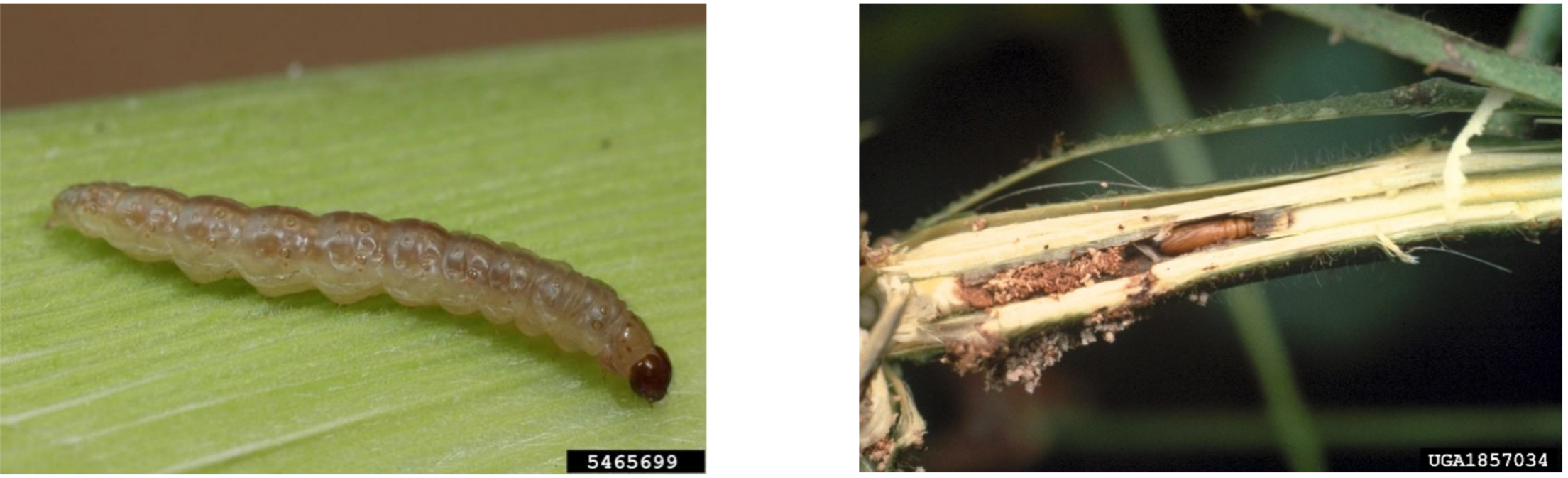
Figure 1. European corn borer larva (left) and pupa in cotton stalk (right). Image credits: Adam Sisson, Iowa State University, Bugwood.org (left); Ronald Smith, Auburn University, Bugwood.org (right)
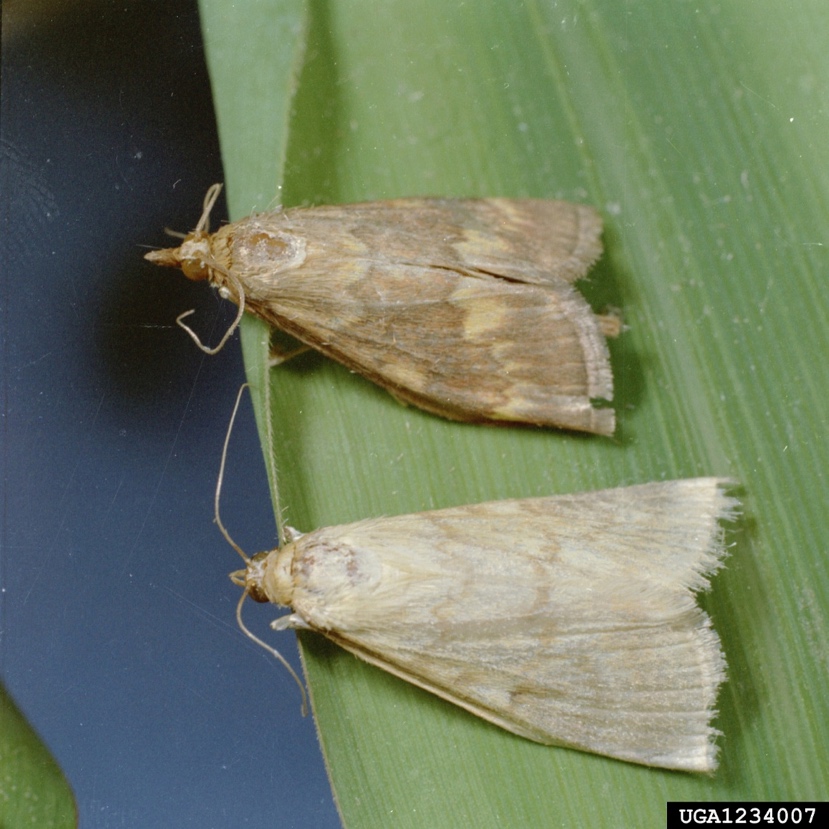
Figure 2. European corn borer male (top) and female (bottom). Image credit: Clemson University – USDA Cooperative Extension Slide Series, Bugwood.org
Life Cycle
ECB life cycle is completed in approximately 27-40 days in South Carolina with up to four overlapping generations per year.8 The insect overwinters as larva in crop residue, with pupation starting in April in South Carolina.8 After emergence and mating, the females select a host plant to lay their eggs. Although ECB can infest various crops (including sorghum, wheat, and vegetables), corn is its preferred host. Females moth typically lay their eggs on top or under corn leaves.9
The eggs hatch in 3-7 days.2 The larvae feed on the corn stalk, tassel or ear until reaching its fifth instar, which takes on average 22-24 days, although longer development times can occur at cooler temperatures.10 Fully grown larvae will become pupae that remain inside the corn stalk until emergence, which takes around 7-10 days.7 Egg-laying or oviposition for the second-generation peaks in mid-July, with larvae pupating in mid-August and adults emerging until September. The third generation oviposition is higher compared to the second, reaching over 120 egg masses per 100 corn plants, peaking in Mid-August.8 Adults of the third generation are observed in the first week of September, and they lay their eggs in late maturing plants other than corn, such as grasses belonging to the genus Panicum.8 This overlapping generation cycle ensures a continuous presence of larvae throughout the growing season, which can lead to persistent damage to field corn if not managed efficiently.
Injury to Corn
The ECB can injure all plant parts except roots, including leaves, tassel, stalks, and ears of corn (Figures 3 and 4). Young larvae feed on corn leaves leaving a windowpane type of injury by leaving the transparent epidermis intact. The most common type of injury in corn is tunneling into the stalk. When this type of injury occurs, frass (i.e., insect excrement) is visible near entrance holes as well as in tunnels in the stalk.2 As a result, the stalk is weakened and falls or breaks with wind, reducing grain production. European corn borer can also feed directly on kernels in the ear, although this type of injury is in general limited. This type of injury can lead to yield losses when several larvae are found in the ear.6 European corn borer can also feed on the tassel, causing the tassel to fall over before it opens, limiting pollination and consequently grain formation by the plant.
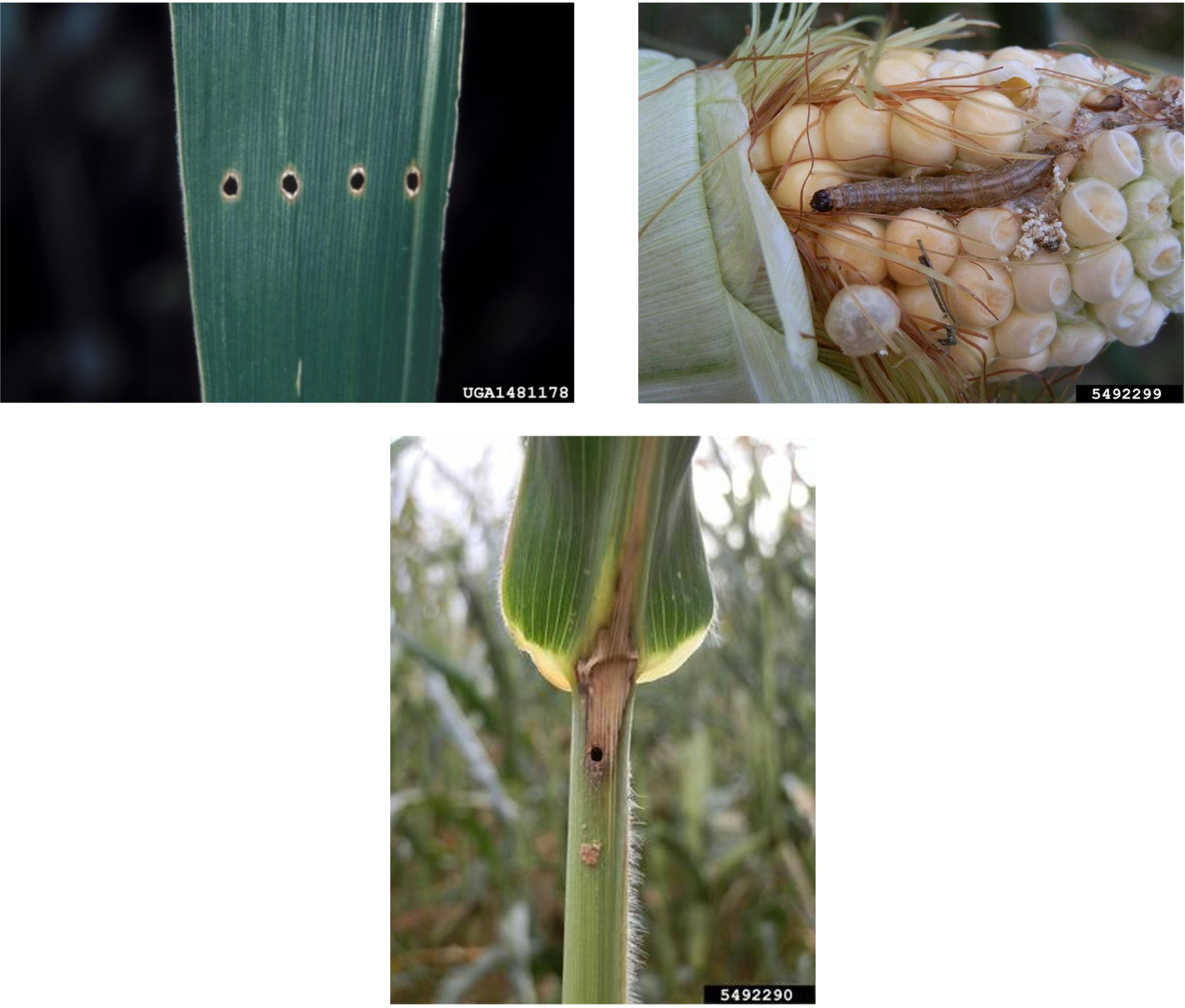
Figure 3. European corn borer injury to corn leaf (left), ear (right) and stalk (bottom). Image credit: Mariusz Sobieski (left and bottom) and Frank Peairs(right), Colorado State University, Bugwood.org
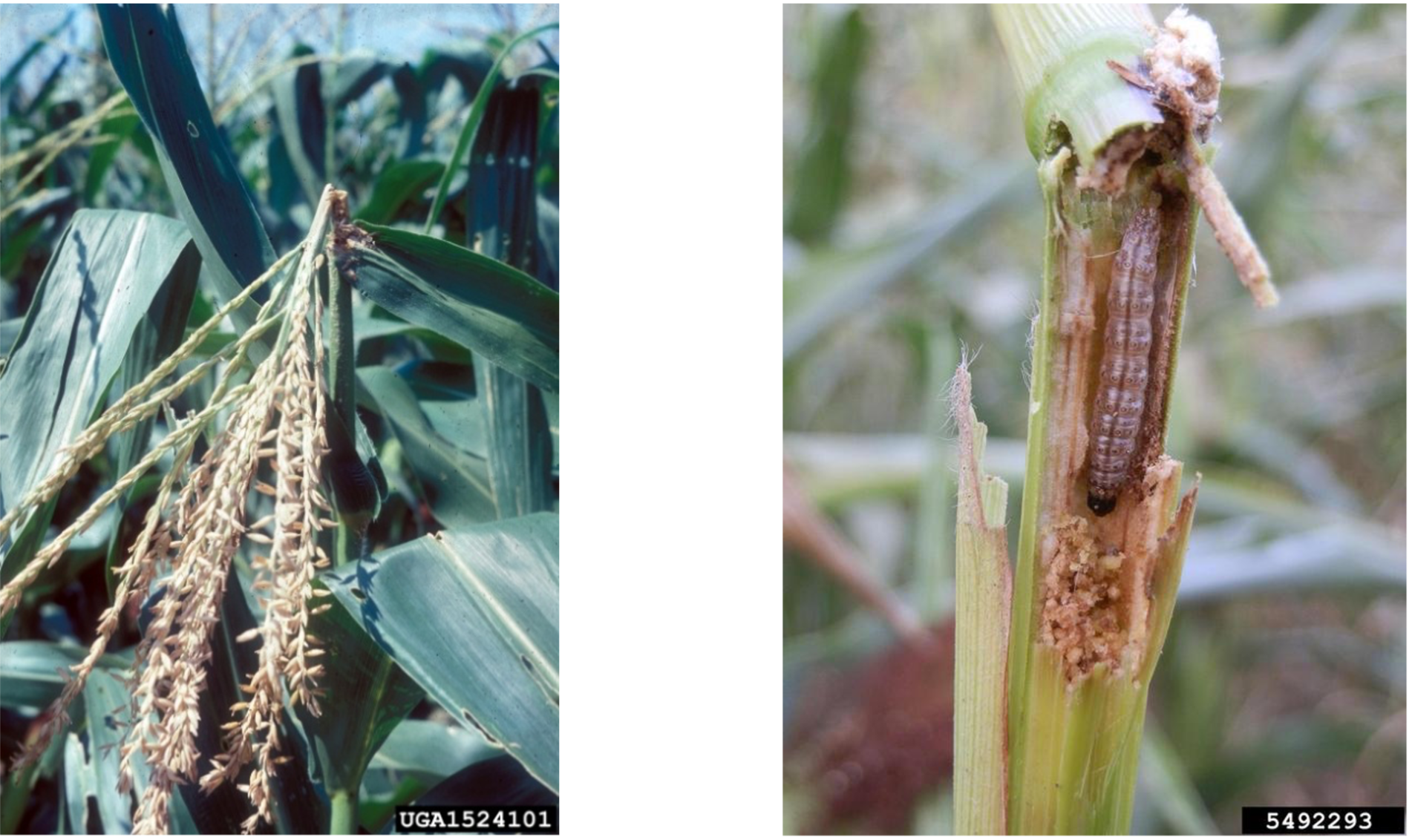
Figure 4. European corn borer injury to corn tassel (left) and corn stalk (right). Images credit: North Carolina State University (left) and Mariusz Sobieski (right), Bugwood.org
Management
European corn borer was the initial target of Bt corn, which was first released in the U.S. in 1996. Bt corn products initially produced a single toxin (Cry1Ab or Cry1F), which both provided excellent levels of control of ECB. Both toxins remain effective for ECB, except in parts of Canada since 2019. In the U.S., Bt corn has been so effective that ECB populations have declined substantially since 1996.4 For example, while over 900 moths were caught in 1967-1968 in a single light trap in South Carolina over one week,8 no infestations in corn have been found across the state over the past 15 years.
More recent Bt corn hybrids express two or three different toxins, which is referred to as “pyramided” Bt corn. By expressing several Bt toxins, the efficacy of Bt corn against ECB and other target pests is increased, in addition to reducing the size of the non-Bt refuge. Among pyramided Bt corn products, Genuity VT Double Pro® (expressing Cry1A.105 + Cry2Ab2) was commercialized in 2009, followed by Pioneer Optimum Intrasect® (Cry1Ab + Cry1F), Dow PowerCore® (Cry1A.105 + Cry2Ab2 + Cry1F), Agrisure Viptera® (Cry1Ab + Vip3Aa20), Optimum Leptra® (Cry1Ab + Cry1F + Vip3Aa20), and Trecepta® (Cry1A.105 + Cry2Ab2 + Vip3Aa20). While the Vip3Aa20 toxin also has activity against several insects including corn earworm (Helicoverpa zea), fall armyworm (Spodoptera frugiperda), and the western bean cutworm (Striacosta albicosta), this toxin has no activity on ECB.11 All pyramided Bt corn that includes Vip3A20, therefore, will also express one or more Cry toxins for ECB control.
Insect Resistance Management
To delay resistance to Bt toxins, growers are required to plant non-Bt corn refuge as an insect resistance management (IRM) practice.12 The requirement is based on the idea that the susceptible ECB moths produced by the non-Bt refuge will mate with potential resistant moths from the Bt crop, maintaining the susceptible genes in the subsequent offspring. The portion of the area planted with non-Bt corn depends on type of Bt corn and region of the U.S.13 In South Carolina and other cotton growing regions, growers are required to plant either 50% and 20% refuge on their farm for Bt corn expressing either a single toxin or multiple toxins, respectively. This refuge is known as a structured refuge, and the area must be planted within the same field as the Bt corn, or less than half a mile from the Bt corn field. In South Carolina, the refuge area should be planted in blocks, as border rows or rows within the Bt fields.13 More details on IRM are included in the Land-Grant Press article “Managing Insect Pests in Field Corn using Transgenic Bt Technology” (Additional reference).
In 2019, the first case of ECB field resistance to Bt corn was reported in Canada. European corn borer population collected from Nova Scotia showed resistance to corn expressing Cry 1F, likely due to the use of corn expressing this single protein over consecutive years without rotation.5 A subsequent study in Canada found multiple ECB populations resistant to Cry1Ab, Cry2Ab2, in addition to Cry1F.14 By contrast, no resistant population of ECB has been reported in the U.S. to date. However, the presence of resistant population of ECB found in Canada underline the risk to corn production in the U.S. Monitoring for resistance is essential to detect potential ECB resistance in the U.S.
Insecticidal Control
Since ECB has not been found in corn in South Carolina for a long time, there are no recent data on managing this insect with insecticides. In addition, much of the applied research on ECB was conducted in the Midwest, including insecticidal control outlined in this section. Because larvae tunnel into the corn stalk and protect themselves from contact with insecticide, moths caught in light traps can be used to help time scouting and the need to use an insecticide.2 Recommendations for management vary depending on the number of generations in a given region. In areas where 3-4 generations might be expected (as is the case in South Carolina), the first generation develops on wild host and is not an economic concern. For the second and third generation, the number of egg masses should be counted on 100 plants per field in order to make a management decision prior to the larvae tunneling into the plant. Management worksheets have been developed to establish economic thresholds used to determine the need to apply an insecticide. Control decisions are based on the number of egg masses found, price of corn, expected yield loss, and expected yield. As an example of such a worksheet, more information can be found here.15
Since ECB is so challenging to manage with insecticides, the adoption of thresholds and the use of insecticides was not widely adopted by growers even prior to the widespread adoption of Bt corn. As a result, 70% of growers in the Mid-West never used insecticides to manage ECB.16 Only carefully timed applications are effective8.
Biological Control
A range of natural enemies can lead to ECB mortality. In South Carolina, ECB eggs were parasitized with Trichogramma pretiosum, T. exiguum, and T. fuentesi, with parasitism rates up to 8%.17 Tachinid flies from the genus Lixophaga were found parasitizing ECB larvae, with rates up 33.3%.17 A total of 24 parasitoids were introduced into the U.S. from 1920-1940 to control ECB.18 Among these, Lydella thompsoni, Macrocentrus grandii, and Eriborus terebrans are found in much of the northern and eastern U.S., with larval parasitism rates up to 7.5% for these three species.19 Another biocontrol agent of ECB is Nosema pyrausta, a fungi that can infect larvae and slow ECB development20; however, data are lacking on the presence and importance of N. pyrausta as a biological control agent in the southeastern U.S., including in South Carolina.
Cultural Control
Planting crops that harbor natural enemies of ECB like wheat and barley near corn fields can help. Since wheat and barley mature earlier than corn, natural enemies migrate to corn before tasseling, enhancing biological control.2
Early harvests have been suggested as a cultural practice for fields infested with ECB to avoid losing ears that would otherwise drop to the ground. While early harvesting requires the use of silos to dry the grains, it is recommended for growers in the southern U.S. 2
Tillage is another practice that can be useful to manage overwintering larvae remaining in corn stalks.21 Plowing in the fall or leaving corn stalks in the field and plowing the field in the spring can reduce larval survival. Nevertheless, adults of ECB can migrate from other areas and areawide management using tillage would likely be necessary to reduce populations.2
Planting time is a cultural practice effective in regions with 1 or 2 generations of ECB. However, in regions like South Carolina, where there are 3 and 4 generations, at least 2 generations will infest fields independent of planting date.2
Summary
ECB used to be the most economically important pest of corn in the US. ECB can significantly reduce corn yield by tunneling into the corn stalk, ear or tassel. Once the larvae tunnel into the stalk, it is protected against insecticide applications, limiting growers’ options to control it. In South Carolina, ECB was known to have 3-4 generations in a year and was once an economic pest in corn. However, with the widespread adoption of transgenic corn expressing Bt toxins from 1996, ECB populations significantly declined. While ECB remains highly susceptible to Bt toxins in the U.S., resistance to Bt toxins was recently found in Canada. Monitoring is necessary to detect potential resistance in the U.S.
References Cited
- Brindley, T. A., & Dicke, F. F. (1963). Significant developments in European corn borer research. Annual Review of Entomology, 8, 155–176.
- Mason, C. E., Rice, M. E., Calvin, D. D., Van Duyn, J. W., Showers, W. B., Hutchison, W. D., et al. (1996). European corn borer ecology and management (North Central Regional Extension Publication 327). Iowa State University.
- Siegfried, B. D., & Hellmich, R. L. (2012). Understanding successful resistance management. GM Crops & Food, 3(3), 184–193. https://doi.org/10.4161/gmcr.20700
- Hutchison, W. D., Burkness, E. C., Mitchell, P. D., Moon, R. D., Leslie, T. W., Fleischer, S. J., Abrahamson, M., Hamilton, K. L., Steffey, K. L., Gray, M. E., & Hellmich, R. L. (2010). Areawide suppression of European corn borer with Bt maize reaps savings to non-Bt maize growers. Science, 330(6001), 222–225. https://doi.org/10.1126/science.1190242
- Smith, J. L., Farhan, Y., & Schaafsma, A. W. (2019). Practical resistance of Ostrinia nubilalis (Lepidoptera: Crambidae) to Cry1F Bacillus thuringiensis maize discovered in Nova Scotia, Canada. Scientific Reports, 9(1), Article 18247. https://doi.org/10.1038/s41598-019-54710-z
- Caffrey, D. J., & Worthley, L. H. (1927). A progress report on the investigations of the European corn borer. U.S. Department of Agriculture.
- Dean, A., & Hodgson, E. (2024). European corn borer. Iowa State University Extension and Outreach. https://crops.extension.iastate.edu/encyclopedia/european-corn-borer
- DuRant, J. A. (1969). Seasonal history of the European corn borer at Florence, South Carolina. Journal of Economic Entomology, 62(5), 1071–1075. https://doi.org/10.1093/jee/62.5.1071
- Hellmich, R. L., Higgins, L. S., Witkowski, J. F., et al. (1999). Oviposition by European corn borer (Lepidoptera: Crambidae) in response to various transgenic corn events. Journal of Economic Entomology, 92(5), 1014–1020. https://doi.org/10.1093/jee/92.5.1014
- Matteson, J. W., & Decker, G. C. (1965). Development of the European corn borer at controlled constant and variable temperatures. Journal of Economic Entomology, 58(2), 344–349. https://doi.org/10.1093/jee/58.2.344
- Burkness, E. C., Dively, G., Patton, T., Morey, A. C., & Hutchison, W. D. (2010). Novel Vip3A Bacillus thuringiensis (Bt) maize approaches high-dose efficacy against Helicoverpa zea (Lepidoptera: Noctuidae) under field conditions: Implications for resistance management. GM Crops, 1(5), 337–343. https://doi.org/10.4161/gmcr.1.5.14765
- Gould, F. (1998). Sustainability of transgenic insecticidal cultivars: Integrating pest genetics and ecology. Annual Review of Entomology, 43(1), 701–726. https://doi.org/10.1146/annurev.ento.43.1.701
- U.S. Environmental Protection Agency, Office of Pesticide Programs. (2017). Insect resistance management for Bt plant-incorporated protectants. https://www.epa.gov/regulation-biotechnology-under-tsca-and-fifra/insect-resistance-management-bt-plant-incorporated
- Smith, J. L., & Farhan, Y. (2023). Monitoring resistance of Ostrinia nubilalis (Lepidoptera: Crambidae) in Canada to Cry toxins produced by Bt corn. Journal of Economic Entomology, 116(3), 916–926. https://doi.org/10.1093/jee/toad046
- Rice, M. E., & Hodgson, E. W. (2017). Ecology and management of European corn borer in Iowa field corn (CROPS 3139R). Iowa State University Extension and Outreach.
- Rice, M. E., & Ostlie, K. (1997). European corn borer management in field corn: A survey of perceptions and practices in Iowa and Minnesota. Journal of Production Agriculture, 10(4), 628–634. https://doi.org/10.2134/jpa1997.0628
- Wilson, J. A., Jr., & DuRant, J. A. (1991). Parasites of the European corn borer (Lepidoptera: Pyralidae) in South Carolina. Journal of Agricultural Entomology, 8(2), 109–116.
- Baker, W. A., Bradley, W. G., & Clark, C. A. (1949). Biological control of the European corn borer in the United States (USDA Technical Bulletin No. 983). U.S. Department of Agriculture.
- Mason, C. E., Romig, R. F., Wendel, L. E., & Wood, L. A. (1994). Distribution and abundance of larval parasitoids of European corn borer (Lepidoptera: Pyralidae) in the East Central United States. Environmental Entomology, 23(2), 521–531. https://doi.org/10.1093/ee/23.2.521
- Lewis, L. C., Bruck, D. J., Prasifka, J. R., & Raun, E. S. (2009). Nosema pyrausta: Its biology, history, and potential role in a landscape of transgenic insecticidal crops. Biological Control, 48(3), 223–231. https://doi.org/10.1016/j.biocontrol.2008.10.014
- Schaafsma, A. W., Meloche, F., & Pitblado, R. E. (1996). Effect of mowing corn stalks and tillage on overwintering mortality of European corn borer (Lepidoptera: Pyralidae) in field corn. Journal of Economic Entomology, 89(6), 1587–1592. https://doi.org/10.1093/jee/89.6.1587
Additional References
Reay-Jones, F. (2022). Managing insect pests in field corn using transgenic Bt technology. Land-Grant Press, LGP 1132.