

Cucurbit Downy Mildew Management for 2025
The information provided below is current at this time. If any updates are made to the information below, the corresponding year in which the updates are made will be included in the publication title. The…
The information provided below is current at this time. If any updates are made to the information below, the corresponding year in which the updates are made will be included in the publication title. The…

Several species of stink bugs are pests of cotton in the southeastern United States, including southern green stink bug, Nezara viridula, green stink bug, Chinavia hilaris (formerly Acrosternum hilare), brown stink bug, Euschistus servus, and…

Phytophagous or plant-feeding mites are among the most common pests in ornamental plant production and maintenance by greenhouse and nursery growers, landscape care professionals, arborists, grounds managers, and gardeners. Correct identification of mite species or…

Growers in the southeastern United States often have problems with bacterial spot on tomato and pepper. Although four species of the Xanthomonas bacterium are involved, in most areas, X. perforans is the most common species…
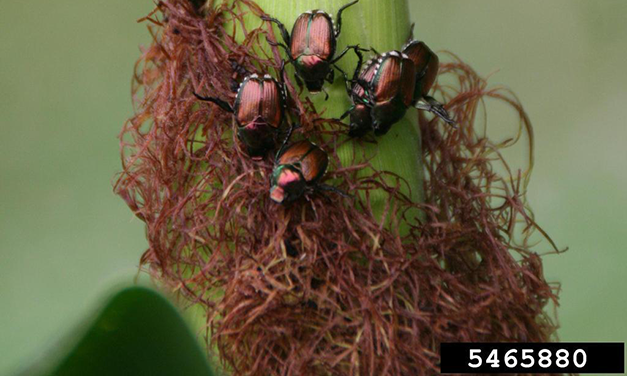
Japanese beetle, Popillia japonica, is a generalist pest capable of feeding on over 300 different plant species, many of which are of economic importance.1 One of the main crops that Japanese beetle can be a…

Fungus gnats are major pests in ornamental plant propagation facilities; high organic matter content and moisture in the rooting media facilitate fungus gnat population growth and damage. Historically, propagation greenhouse managers rely on broad-spectrum insecticides,…

Corn earworm, Helicoverpa zea, is the most common aboveground pest of corn in the southeastern United States.1 It is also a significant pest of many other cultivated crops in the Southeast, including cotton, soybean, peanut,…

Consumers are becoming more concerned about pesticide usage on ornamental plants and turfgrass in and around their homes and on the fruits and vegetables they eat. Not only are the negative health and environmental risks…
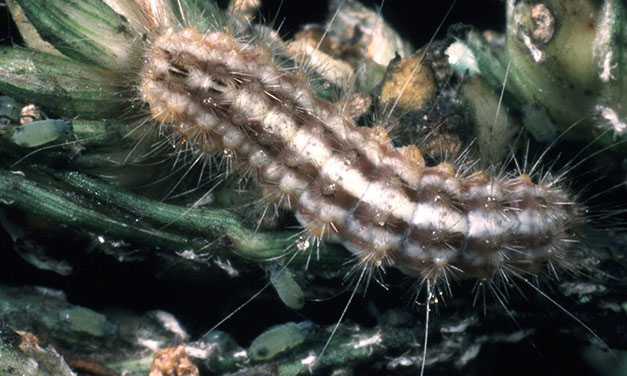
Several species of lepidopteran larvae can infest and cause injury to sorghum grain heads. These include corn earworm, Helicoverpa zea, fall armyworm, Spodoptera frugiperda, and sorghum webworm, Nola sorghiella. These species often occur in tandem…

Thrips (Thysanoptera: Thripidae) are the most consistent and predictable insect pests of Upland cotton, Gossypium hirsutum L., in South Carolina and much of the southeastern United States. These small insects have piercing-sucking and rasping mouthparts…