

Oaks (Quercus spp.) are an important component of many forests across the Southeast, from oak-hickory and oak-pine forests of the Appalachian Mountains and Piedmont to bottomland hardwood and maritime forests of the Coastal Plain. Because of the ecological, economic, and cultural values that oaks provide, forest landowners and forest managers are often interested in managing oaks on the lands that they steward. Planting oak seedlings can be an effective component of promoting oak establishment and regeneration through active forest management. Successful planted regeneration can be accomplished through the selection of site-appropriate oak species and seedling stock, proper seedling care and planting techniques, and the mitigation of limiting factors to promote seedling survival, growth, and recruitment.1,2 This publication provides landowners, foresters, and other forest stewards with practical recommendations for implementing an oak planting project.
Management Objectives and Approaches
Defining the long-term objectives and budget of a planting project is essential to success, as these goals and constraints will guide the selection of seedlings and the methods used to promote their establishment and growth. Providing habitat for focal wildlife species is a common objective in oak management, as oaks provide food and cover resources that are selected by white-tailed deer, black bears, wild turkeys, and many other mammal and bird species. Oak management can also encompass the provision of hardwood sawtimber, understory plant diversity, recreational opportunities, and aesthetic values.3
Tree planting can be a useful tool for supplementing existing natural oak regeneration in a stand. Sustainable oak regeneration is heavily dependent on the presence of well-developed oak seedlings and saplings, referred to as advance reproduction, that are already established in the understory before an overstory disturbance. This advance reproduction can be released and successfully grow once a harvest or natural disturbance reduces canopy cover and increases light availability in the understory.4 On many sites where there is interest in restoring or sustaining oak, advance reproduction may not be present in adequate numbers to successfully maintain oak as a major component of the stand. There may also be an absence or lack of healthy overstory oaks of desired species that can contribute to new regeneration through acorn production or sprouting.5,6 In these scenarios, oak seedlings may be planted to enhance the density and diversity of oak reproduction in the stand. This practice is referred to as enrichment planting. Enrichment planting may be a good option to employ alongside a regeneration harvest in an appropriate silvicultural system, such as a shelterwood system, or in response to a severe natural disturbance such as storm damage.4,5,6 Detailed recommendations for planning and implementing oak enrichment planting are available from the White Oak Initiative and University of Kentucky Cooperative Extension Service and the USDA Forest Service. State foresters and other registered foresters can provide silvicultural recommendations specific to a site and work with landowners to develop a forest management plan that integrates oak planting.
Selecting Oak Species
Dozens of native oak species can be found in the Southeast, and these species vary widely in their optimal soil characteristics, shade tolerance, growth rate, and resilience to environmental stressors.7 For a planting project to be successful, it is vital to select oak species well adapted to the planting location. Table 1 provides an overview of oaks commonly sold by southeastern nurseries and characteristics to consider when selecting species. Across diverse southeastern landscapes from dry uplands and ridges to moist bottomlands along waterways, oaks vary in the soil moisture, texture, and topographic position where they grow most successfully. Southeastern oak species also differ in their ability to survive and grow in shade, varying from very intolerant of shade to intermediate in tolerance. Among upland oaks, white oak (Quercus alba) and chestnut oak (Quercus montana) are generally considered more shade tolerant than northern red oak (Quercus rubra) and black oak (Quercus velutina), but tolerance can vary even between trees of a given species.8,9
Table 1. Characteristics of Common Oak Species Available from Nurseries in the Southeast7,8
| Species | Oak Group | Shade Tolerance | Typical Site | SC Native Range |
| Black oak (Quercus velutina) | Red | Moderate | Variety of sites, especially drier sites | Statewide |
| Cherrybark oak (Quercus pagoda) | Red | Low | Well-drained bottomlands | Coastal Plain, lower Piedmont |
| Chestnut oak (Quercus montana) | White | Moderate | Dry uplands | Blue Ridge, Piedmont |
| Chinkapin oak (Quercus muehlenbergii) | White | Low | Well-drained uplands | Blue Ridge, Piedmont |
| Live oak (Quercus virginiana) | White | Moderate | Variety of sites, especially sandy soils | Lower Coastal Plain |
| Northern red oak (Quercus rubra) | Red | Moderate | Variety of sites | Blue Ridge, Piedmont |
| Overcup oak (Quercus lyrata) | White | Moderate | Poorly drained bottomlands | Coastal Plain, lower Piedmont |
| Shumard oak (Quercus shumardii) | Red | Low | Well-drained bottomlands | Coastal Plain, lower Piedmont |
| Southern red oak (Quercus falcata) | Red | Low to moderate | Dry uplands | Statewide |
| Swamp chestnut oak (Quercus michauxii) | White | Low | Well-drained bottomlands | Coastal Plain, Piedmont |
| Water oak (Quercus nigra) | Red | Low | Variety of sites | Statewide |
| White oak (Quercus alba) | White | Moderate | Variety of sites, especially deep, well-drained soils | Statewide |
| Willow oak (Quercus phellos) | Red | Low | Bottomlands | Coastal Plain, Piedmont |
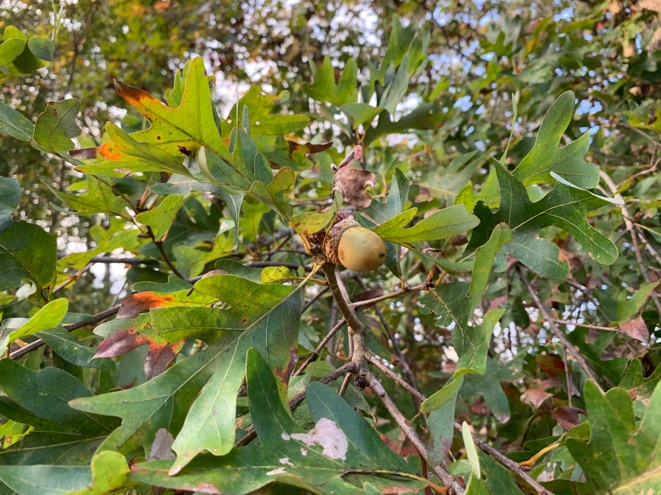
Figure 1. Acorns of white oak (Quercus alba) and other species in the white oak group contain fewer tannins than red oak acorns, making them more palatable to wildlife. Image credit: Ryan Bohannon, Clemson University.
Due to the variability in traits between species, choosing to manage for a variety of oak species on a property can have multiple benefits in forest stewardship. Oaks differ in their tolerance to disturbances such as wind, flooding, drought, and fire, so promoting oak species diversity at the stand or landscape scale can support forest health and resilience. Another important source of variation to consider is the classification of a species into the red oak or white oak groups. Acorn production for wildlife is often a major objective in oak management, and red and white oaks differ in the development time, germination season, and palatability of their acorns. White oak acorns are highly selected by white-tailed deer and other wildlife because they contain lower tannin levels than red oak acorns, making them more palatable and digestible (Figure 1). However, red oaks are generally more consistent acorn producers and can serve as a buffer food in times of insufficient white oak acorn production. Acorns also differ in size between oaks and are consequently selected by different wildlife species. Promoting a mixture of red and white oak species can thus be especially beneficial for supporting the consistency and diversity of food resources for wildlife.4
Sourcing and Selecting Seedlings
Once appropriate oak species have been chosen for the planting site, the next steps in the regeneration process are to plan a planting schedule and source seedlings from a forest nursery. Seedlings should be planted during the dormant season. The optimal planting season in much of the Southeast runs from winter to early spring but will vary slightly based on the climate and elevation of the planting site. Nurseries operated by state forestry agencies produce seedlings of a variety of native oak species. To ensure the desired species and quantities of seedlings are available, it is best to order seedlings well in advance of the planned planting dates. State nurseries typically begin taking orders during the summer prior to the winter planting season. Many state nurseries will also accept out-of-state orders later in the year. Private nurseries also operate in the Southeast and can provide additional options. A searchable directory of potential nurseries is available from the Reforestation, Nurseries, and Genetic Resources (RNGR) program (https://tinyurl.com/RNGRdirectory).
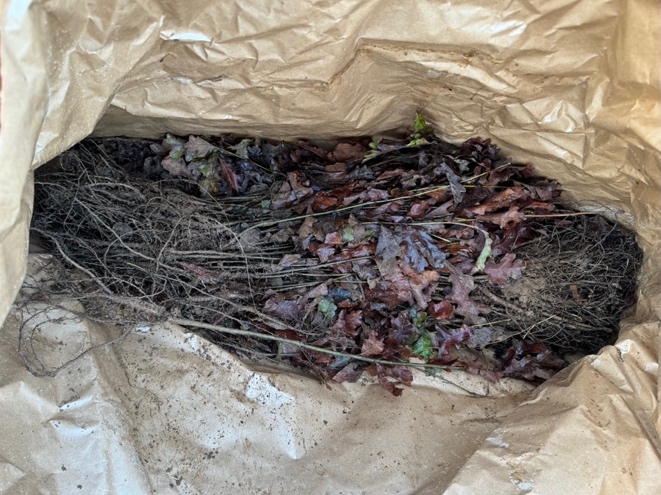
Figure 2. One-year-old (1-0) bareroot cherrybark oak (Quercus pagoda) seedlings in their original packaging from the nursery. Image credit: Ryan Bohannon, Clemson University.
If options are available, the stock type and seed source of oak seedlings are also important to consider. Tree seedlings may be sold as either bareroot seedlings or container-grown (containerized) seedlings. Containerized seedlings are planted with their roots surrounded in their original growing medium. Containerized seedlings are more expensive than bareroot seedlings but may provide better survival, particularly on harsh sites or outside of the optimal planting season. In the Southeast, oaks are typically sold as one-year-old (1-0) bareroot seedlings (Figure 2). As much as possible, it is best to choose seedlings grown from seed sourced from the same region as the planting site. This helps ensure that planted seedlings will be well adapted to local conditions. Most nurseries in the Southeast do not provide multiple seed source options for oak species, although region-specific options (e.g., Mountain, Piedmont, Coastal) may be available in some states.
Planting Methods
After sourcing and ordering oak seedlings from the nursery, careful handling and planting techniques will give seedlings the best chance at establishment and survival. Proper seedling care during storage and planting is critical to reducing stress and preventing mortality. It is best to plant seedlings as soon as possible after receiving them from the nursery. If short-term unrefrigerated storage is necessary, seedlings should be kept in a cool, dark location with good air circulation. Seedlings can generally be stored in this manner for two weeks at most. When seedlings are taken into the field for planting, they should be kept in the shade or under a loose reflective covering. Preventing roots from drying out is also essential to seedling survival. Seedlings should remain in their original packaging until it is time to plant, and cool water can be added if needed to keep roots moist. A bucket containing mud, moss, or other moist substrate can be used to carry seedlings in the field. Roots will dry quickly when exposed to wind or sun, so it is best to only remove and handle one seedling at a time when planting.

Figure 3. When planting oak seedlings with large root systems, a wider and heavier KBC planting bar (top) may be more effective than a standard dibble bar (bottom). Image credit: Ryan Bohannon, Clemson University.
Proper planting tools and techniques are also important to seedling success. Common planting tools include standard dibble bars, KBC planting bars, and planting shovels. The chosen planting tool will be inserted into the soil to create a hole deep and wide enough that the entire root system of the seedling can fit straight within the hole without being bent upward or twisted. Oak seedlings often have large root systems that can make planting difficult using a standard dibble bar; the wider blade of a KBC bar or shovel may be more effective (Figure 3).5,6 Place the seedling into the hole so that the root collar is level with the ground line. The root collar is located just above the root system and can typically be identified by a color change on the stem. Once the seedling is placed in the hole, use the planting tool to eliminate air pockets and ensure that the seedling’s roots are in firm contact with the soil. For example, insert a planting bar a few inches behind the planting hole and tilt the bar backwards and then forwards to push the soil against the roots at the bottom and top of the hole. Finally, press around the seedling to completely fill the hole, firm the soil around the seedling, and ensure that the stem is vertical. Gently tug on the seedling to confirm that it is firmly established in the soil. Visual guides for planting techniques using several tools are available from the South Carolina Forestry Commission.
Promoting Survival and Growth
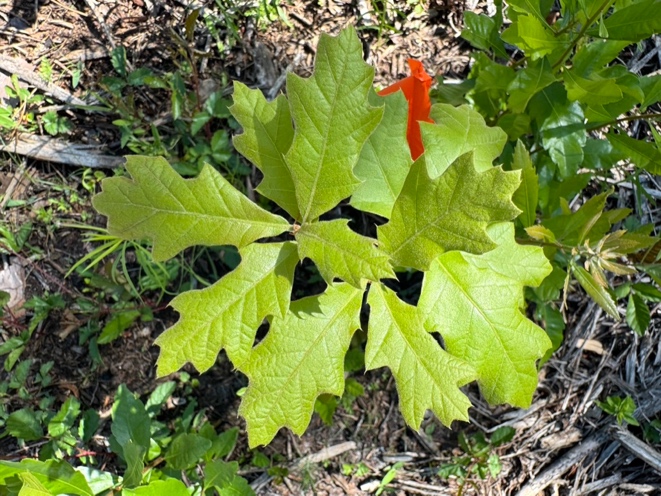
Figure 4. Cherrybark oak (Quercus pagoda) seedling planted in the Coastal Plain of South Carolina. Image credit: Ryan Bohannon, Clemson University.
Oak regeneration is a long-term process that does not end with the establishment of seedings (Figure 4). Rather, a sustained commitment to active management is often essential to successfully sustaining oaks in a stand. In addition to establishing new trees, sustainability is dependent upon seedlings growing to become overstory trees that survive and reproduce; this process is known as recruitment.10 Oak regeneration and recruitment can be limited by a number of factors that impede tree survival and growth. Two of the most prominent limiting factors that should be considered by landowners and managers in the Southeast are competing vegetation and deer browse.1,2
Competing Vegetation
On sites in South Carolina and throughout the Southeast, planted oak seedlings will typically have to contend with other tree species that grow more rapidly in abundant sunlight. These vigorous competitors can quickly overtop slower-growing oak seedlings, suppressing their growth, preventing recruitment, and eventually leading to mortality. Oak regeneration is typically easier to achieve on drier, less productive sites because competition from other species is less intense.1,2,6 Potential methods for managing competing vegetation include mechanical treatments, herbicide applications, and prescribed fire.
Deer Browse

Figure 5. Rigid mesh tree shelters are one method for protecting planted oak seedlings from deer browse. Image credit: Ryan Bohannon, Clemson University.
Browsing by white-tailed deer can be a major impediment to oak regeneration in the eastern United States. Repeated browsing will prevent recruitment and can lead to eventual mortality. Several options are available if deer browse is a limiting factor on a site, including fencing and individual tree shelters.1,2 Tree shelters include solid plastic or rigid mesh tubes that are placed over individual seedlings and secured with a stake (Figure 5). Minimum recommended heights for tree shelters and fencing are 4 feet and 6 feet, respectively.5,6 Efforts to mitigate deer browse will ultimately be determined by the intensity of browse pressure on the site and the available budget and labor for installing and maintaining expensive prevention measures.
Conclusion
Promoting successful oak regeneration with planting is based in thoughtful seedling selection, proper seedling care and planting practices, and a long-term commitment to seedling survival, growth, and recruitment. To help landowners achieve regeneration success, state and federal cost-share programs may be available to assist with tree planting costs such as site preparation, planting materials, fencing, and tree shelters. Through these best practices, enrichment planting of oak seedlings can help support the sustainability of oak species and their many associated values in southeastern forests into the future.
References Cited
- Dey, D. C., Jacobs, D., McNabb, K., Miller, G., Baldwin, V., & Foster, G. (2008). Artificial regeneration of major oak (Quercus) species in the eastern United States—A review of the literature. Forest Science, 54(1), 77–106. https://doi.org/10.1093/forestscience/54.1.77
- Dey, D. C., Gardiner, E. S., Schweitzer, C. J., Kabrick, J. M., & Jacobs, D. F. (2012). Underplanting to sustain future stocking of oak (Quercus) in temperate deciduous forests. New Forests, 43, 955–978. https://doi.org/10.1007/s11056-012-9330-z
- Forrester, J. A., Keyser, T. L., & Schnake, D. K. (2023). Ecological silviculture for southern Appalachian hardwood forests. In B. J. Palik & A. W. D’Amato (Eds.), Ecological silvicultural systems: Exemplary models for sustainable forest management (pp. 98–111). Wiley.
- Johnson, P. S., Shifley, S. R., Rogers, R., Dey, D. C., & Kabrick, J. M. (2019). The ecology and silviculture of oaks (3rd ed.). CABI.
- Clark, S. L., & Dey, D. C. (2023). Enrichment planting of upland oaks (FOR161). Cooperative Extension Service, University of Kentucky, Department of Forestry and Natural Resources. https://forestry.ca.uky.edu/articles/for161-enrichment-planting-upland-oaks
- Clark, S., Schlarbaum, S. E., Warwell, M., Crane, B., & Rodrigue, J. (2022). Guidelines for securing and planting upland oak seedlings in the Southern Region (Gen. Tech. Rep. SRS-267). U.S. Department of Agriculture Forest Service, Southern Research Station. https://research.fs.usda.gov/treesearch/64180
- Kirkman, L. K., Brown, C. L., & Leopold, D. J. (2007). Native trees of the Southeast. Timber Press.
- Burns, R. M., & Honkala, B. H. (Tech. coords.). (1990). Silvics of North America: Vol. 2. Hardwoods. U.S. Department of Agriculture, Forest Service. https://www.srs.fs.usda.gov/pubs/misc/ag_654/volume_2/vol2_table_of_contents.htm
- Brose, P. H., & Rebbeck, J. (2017). A comparison of the survival and development of the seedlings of four upland oak species grown in four different understory light environments. Journal of Forestry, 115(3), 159–166. https://doi.org/10.5849/jof.15-155
- Dey, D. C. (2014). Sustaining oak forests in eastern North America: Regeneration and recruitment, the pillars of sustainability. Forest Science, 60(5), 926–942. https://doi.org/10.5849/forsci.13-114
Additional Resources
Steele, J. (2020, November). Seedling selection guidelines for forest landowners (LGP 1097). Clemson Cooperative Extension, Land-Grant Press by Clemson Extension. https://lgpress.clemson.edu/publication/seedling-selection-guidelines-for-forest-landowners/